
If your conference logistics live across spreadsheets, email threads, and multiple platforms, you already know the problem.
A session change doesn’t reach registration. Speaker updates don’t reach AV. The “latest” agenda exists in too many versions. When any of these things happen, even a great event program can feel chaotic on-site.
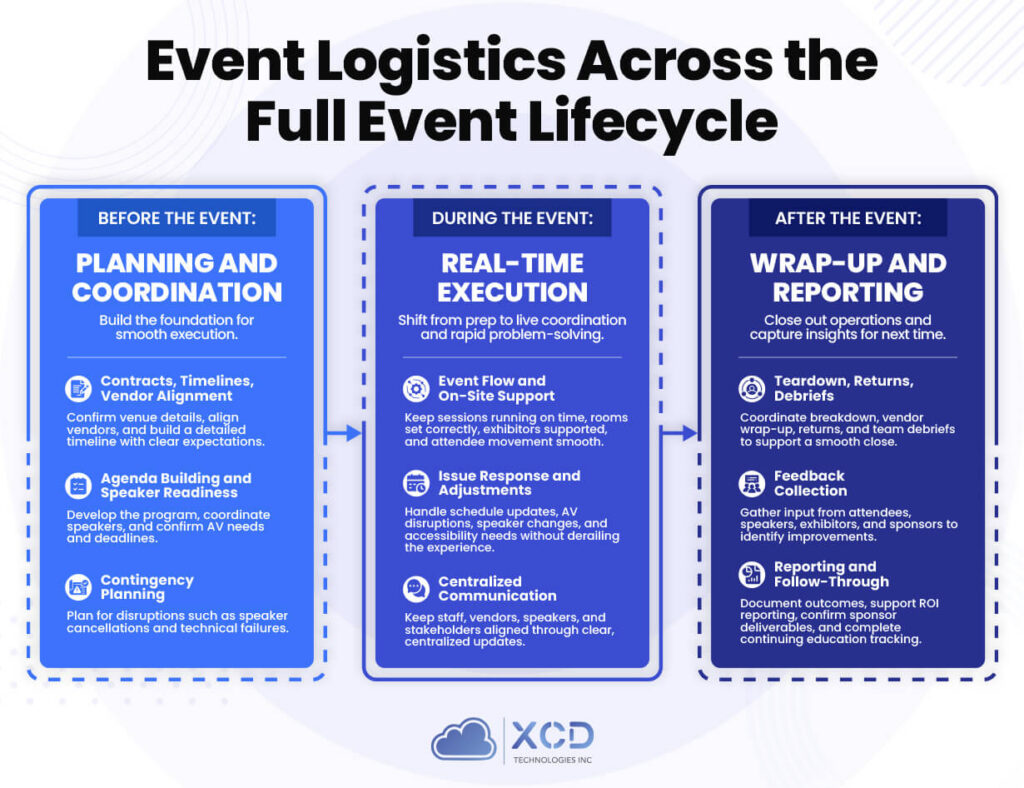
Logistics in event management is the coordination layer that keeps your event information accurate, your team aligned, and your conference running smoothly from planning through post-event reporting.
Attendees may only see the sessions, speakers, and networking opportunities, but behind every successful conference is a carefully coordinated system of timelines, vendors, staff, technology, and communication.
Why It’s Important To Have Solid Event Logistics
When logistics are managed well, check-in feels efficient, sessions start on time, speakers are prepared, exhibitors are set up properly, and transitions between activities feel seamless. When logistics break down, the delays, confusion, and technical issues become visible fast.
Event execution directly affects attendee satisfaction and engagement, and having a successful event protects the outcomes your stakeholders care about.
Smooth operations remove friction, allowing attendees to focus on the program they showed up for. They’re more likely to join keynotes, stay for breakouts, and participate in networking.
For sponsors and exhibitors, logistics show up in measurable ways, such as booth traffic and lead retrieval.
For organizers, it builds trust and increases the likelihood of reaching attendance goals year after year.
The 7 Core Components of Event Logistics
Logistics touch every operational layer of an event. While the specific details vary by event type, most conferences rely on several core components working together in a coordinated system.
1. Venue and Space Planning
Venue logistics extend beyond simply selecting a location. Effective planning includes:
- Organizing a floor plan that supports smooth attendee flow
- Ensuring accessibility requirements are met
- Coordinating clear, consistent signage
- Managing staging and presentation setups
Thoughtful space planning helps attendees move easily between sessions, reduces congestion, and minimizes confusion during busy parts of the program.
2. Transportation and Shipping Coordination
While this component is less relevant for webinars, many conferences rely on precise coordination for transportation and shipping. Examples of what’s typically involved are:
- Arranging speaker travel and accommodations
- Managing freight and exhibitor shipments
- Scheduling vendor deliveries and equipment setup
Delays in transportation or shipping can quickly affect rehearsals, session start times, and overall event readiness. Clear timelines and consistent communication with all parties are essential.
3. Staffing and On-Site Roles
Clearly defined roles and responsibilities help maintain operational control during any professional event. Effective logistics planning includes:
- Assigning ownership for key functions such as registration, session rooms, and exhibitor support
- Establishing clear responsibility for technical issues, schedule changes, or attendee concerns
- Training staff and volunteers on event procedures and communication protocols
When everyone understands their responsibilities and who to contact for support, teams can resolve issues faster and keep the event running smoothly.
4. Technology and Infrastructure
Technology underpins nearly every aspect of modern event logistics, including:
- Managing audiovisual equipment and staging
- Ensuring reliable Wi-Fi and power access
- Supporting hybrid or virtual event platforms
- Protecting attendee data through cybersecurity and privacy safeguards
Technical failures are highly visible, so redundancy planning and system testing are essential parts of logistics preparation.
5. Registration, Check-In, and Attendee Flow
Registration and check-in create the first operational impression of the event. Logistics planning in this area covers:
- Printing and scanning attendee badges
- Managing check-in lines and staffing
- Tracking attendance in real time
Efficient attendee flow sets the tone for the entire conference and reduces early frustration.
6. Session and Speaker Management
For conferences, speaker and session logistics are often the most complex element. This component may include:
- Coordinating abstract-driven scheduling
- Managing speaker communications and deadlines
- Aligning presentation materials and AV needs
- Handling last-minute cancellations or room changes
Because sessions are central to the attendee experience, even small coordination gaps can disrupt the overall agenda.
7. Exhibitor and Sponsor Logistics
Exhibitors and sponsors contribute significant revenue and visibility to many conferences. Logistics in this area includes:
- Coordinating booth assignments and setup timelines
- Managing lead capture systems
- Ensuring sponsor deliverables are fulfilled as promised
Clear processes and consistent communication help protect sponsor relationships and long-term partnerships.
Best Practices for Smoother Event Execution
Even with strong planning frameworks, successful event logistics depend on consistent coordination across teams, systems, and stakeholders. The following practices help reduce operational risk and keep conferences running smoothly.
Centralize Key Event Information
Session schedules, speaker details, and operational updates should live in one place, so staff, vendors, and volunteers always work from the same information.
Assign Clear Ownership Across Teams
Each logistical function should have a designated lead responsible for execution and issue resolution.
Test Technology and Session Workflows in Advance
Running AV checks, speaker rehearsals, and system tests helps prevent highly visible technical disruptions.
Prepare for Last-Minute Changes
Backup plans for speakers, rooms, and technical systems allow teams to respond quickly when unexpected issues arise.
Strong logistics is about building systems that allow conferences to adapt quickly while delivering a consistent experience for attendees, speakers, and sponsors.
Simplifying Logistics in Event Management with the Right Software
Event logistics will always involve moving parts. Coordinating venues, speakers, sessions, vendors, and attendees requires careful planning and constant communication. As conferences grow in size and complexity, managing these elements manually or across disconnected tools becomes increasingly difficult.
X-CD’s conference management software helps simplify logistics by bringing critical workflows together in one system. When registration, abstract management, scheduling, speaker coordination, and attendee communications are connected, teams can reduce manual work, minimize errors, and keep everyone aligned.
Request a demo to see how X-CD can support your logistics in event management.